Everest Base Camp Trek

2.0 from 1 review

Overview

Duration
10 days
Difficulty
Moderate
Max altitude
8823 m
Region
Everest
Start/End point
KTM-Kathmandu
Group size
2-12 people
Activity
Trekking
Meals
Includes

One of the finest treks in the world, centred on Mt. Everest (8,848 m) The trail runs along the edge of Sagarmatha National Park, a UNESCO World Heritage Site A flight into Lukla, often called one of the world's most dangerous airports Namche Bazaar, the gateway to Everest Base Camp and the main acclimatisation stop Tengboche, a spiritual hub with the region's most important monastery A hike up Kala Patthar (5,550 m), higher than base camp itself, with panoramic views A local, English-speaking, licensed trekking guide throughout Destinations Lukla · Phakding · Namche Bazaar · Tengboche · Dingboche · Lobuche · Gorakshep · Everest Base Camp

About the trek

Everest Base Camp is a world-renowned trekking destination in the Khumbu region of Nepal. Situated at 5,364 m, the base camp offers stunning views of Mount Everest (8,848 m). The 14-day journey passes through picturesque Sherpa villages and rugged mountain terrain, starting with a scenic flight from Kathmandu to Lukla and following the Dudh Koshi River up to Namche Bazaar, the gateway to the Khumbu.

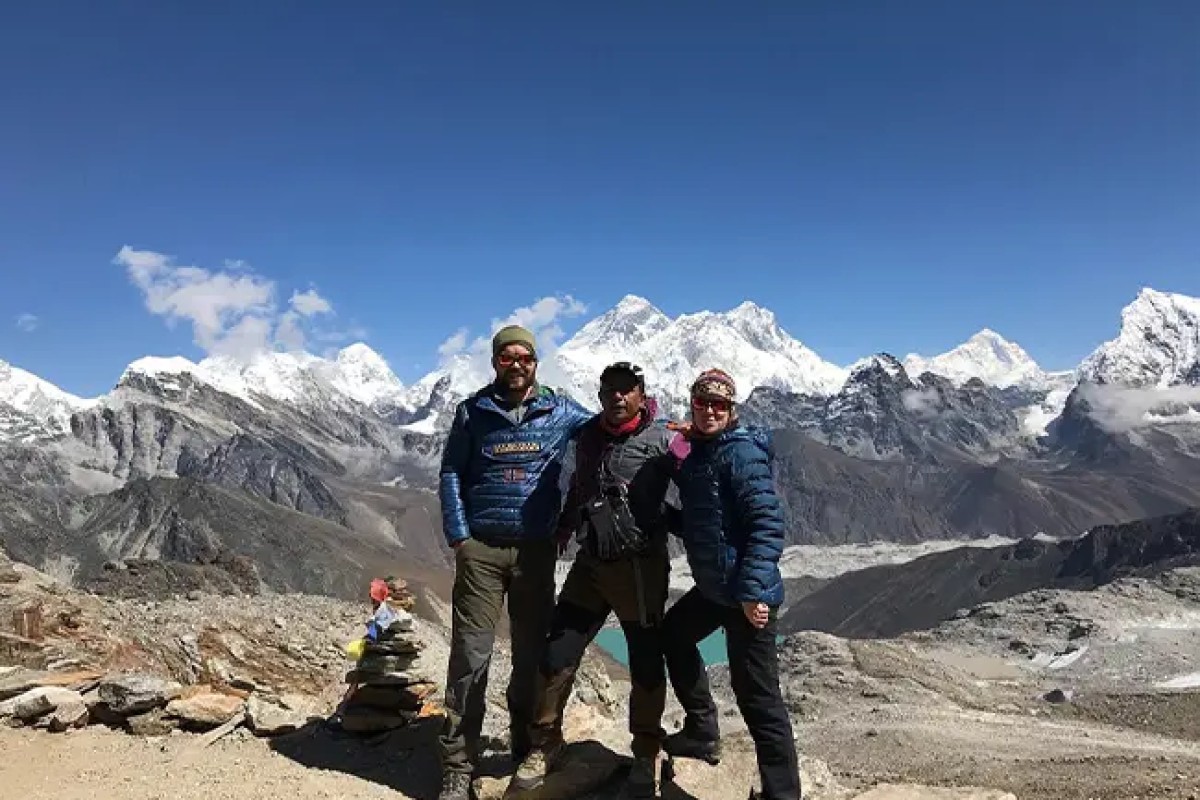
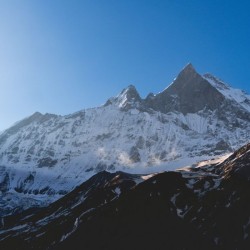
Along the way you'll see Lhotse, Nuptse and Ama Dablam, and pass countless monasteries, prayer flags and mani stones.

The trek is challenging and needs a good level of fitness, but with proper preparation and pacing, trekkers of many backgrounds complete it. Two acclimatisation days, in Namche and Dingboche, are built into the itinerary.

Accommodation along the trail

Accommodation ranges from simple teahouses to comfortable lodges, and even a few luxury hotels such as Yeti Mountain Home in Lukla and Hotel Everest View near Namche. Rooms are usually twin-share with basic furniture.

Attached bathrooms and hot showers become rarer higher up. In Dingboche, Lobuche and Gorakshep, squat toilets and bucket showers are more common. Wi-Fi is widely available through Everest Link data cards, and NTC mobile coverage reaches further than you might expect, even to Gorakshep.

Your Sherpa guide

Sherpas are an ethnic group whose ancestors migrated from Tibet over 600 years ago and settled in the Solu-Khumbu region. They are renowned worldwide for their mountaineering skill and high-altitude endurance, which they combine with a deep Buddhist spirituality, such as holding a puja ceremony before expeditions to ask for safe passage.

On this trek you'll be guided by a local, Lukla-based guide with strong knowledge of the trail and its lodges.

Itinerary

Day 1 Arrival in ktm

Arrive in Kathmandu, where our representative will warmly welcome you at Tribhuvan International Airport and transfer you to your hotel. Settle in, relax, and enjoy the rest of the day at leisure as you prepare for your Everest Base Camp adventure.

Where to stay

Buddha Lodge — Gorakshep

What to get

Breakfast, Lunch and Dinner

Note

Breakfast is available for any booking, Lunch and Dinner can be ordered separately.

Day 2 TREK

TREKTREKTREK

Cost details

What's included

  • Round-trip Kathmandu–Lukla flights, including taxes
  • 2 nights in a 3-star hotel in Kathmandu with breakfast
  • 11 nights of lodging on the trek (twin-sharing)
  • All meals on the trek: breakfast, lunch and dinner
  • Seasonal fruit snacks on trekking days
  • National park entry and permits (Sagarmatha NP + Khumbu Pasang Lhamu Rural Municipality)
  • Licensed, English-speaking trekking guide
  • Porter support (1 porter per 2 trekkers)
  • Duffel bag and sleeping bag for use on the trek
  • First-aid kit and free health checks at Namche, Dingboche and Gorakshep
  • 24-hour doctor consultation by phone

What's not included

  • International flights
  • Nepal entry visa fees
  • Excess baggage charges (Lukla flight limit: 9 kg)
  • Meals in Kathmandu before and after the trek
  • Personal expenses: Wi-Fi, hot showers, charging, drinks
  • Personal clothing and gear
  • Travel insurance covering high-altitude rescue and evacuation
  • Tips for guides and porters

Gear and equipment

Clothing

  • Sun hat and beanie
  • Fleece jacket
  • Quick-dry underwear

Footwear and accessories

  • Trekking boots, worn in
  • Wool socks and liner socks

Route map

Reviews

4.9

Based on 312 reviews

We only had four days in Nepal.

Landing at Kala Patthar with Everest right there in front of us is something I will be talking about for the rest of my life. Booking took one email.

Priya · Nov 2026
Tripadvisor

Frequently asked questions

How hard is the Everest Base Camp Trek?

It is a challenging trek, mainly because of the altitude rather than the terrain. You walk 4–8 hours a day on well-used trails. With good fitness, proper preparation and a steady pace, trekkers of many backgrounds complete it.

Important notes

The standard itinerary may change because of flight delays or cancellations, weather, natural disasters, changes in government regulations, or a trekker's health. Your guide will always choose the safest option.

  • Arrive in Kathmandu at least one day before the trek starts, to rest and sort your gear
  • Leave buffer days before your international flight home in case the Lukla flight is delayed
  • In peak season, Lukla flights may leave from Ramechhap, about 4 hours' drive from Kathmandu
  • The last ATM on the trail is in Namche Bazaar, so carry enough Nepali rupees for the trek

Optional add-ons

Extend your trip with Kathmandu sightseeing, other adventure activities, or day trips before or after the trek. Ask us when you book.

Safety guidelines and protocol

Your guide is trained in first aid and in spotting altitude sickness. These rules apply to every group:

  1. Climb slowly. Rest days in Namche and Dingboche let your body adjust before the high section.
  2. Regular health checks. Free oxygen and pulse checks at Namche, Dingboche and Gorakshep, and a doctor on the phone 24 hours a day.
  3. Turn back if needed. Anyone with signs of severe altitude sickness goes down straight away, with a guide.
  4. Evacuation. We arrange helicopter rescue through your insurer, day or night.
  5. Drink water. 3–4 litres a day; avoid alcohol at altitude.

Travel insurance covering high-altitude rescue and evacuation is required.